The IRS Is Here to Help. So Is ICE.

It’s been almost ten years since I’ve written here. The last time I posted, Donald Trump had just clinched the GOP nomination, his Banzhaf power index had hit 1.0, and I was calculating the proportion of his campaign contributions that were unitemized.1 That was June 2016. I stopped writing because the general election demanded a firehose of commentary I didn’t have the time or the stomach for, and the opportunity cost of blogging versus finishing actual research was getting untenable.

A lot has happened. Some of the people who used to read this blog — colleagues, friends, people I admired — aren’t here anymore. I won’t make a list, because that isn’t what this space is for, but I’ll say that their absence is felt, and that part of what brings me back is the sense that the kind of work this blog tries to do — taking the math seriously, taking the politics seriously, and refusing to pretend you can do one without the other — matters more now than it did when I left.

For those who are new: this is a blog about the math of politics, which is a thing that exists whether or not anyone writes about it. The tagline is three implies chaos, which is a reference to the fact that collective decision-making with three or more alternatives is, under very general conditions, a mess.2 I’m a political scientist at Emory. I use formal models — game theory, mechanism design, social choice — to study how institutions shape behavior. And I write here when something in the news is so perfectly illuminated by the theory that I can’t not.

Today a federal judge ruled that the IRS violated federal law approximately 42,695 times, and I have a model for that. Let’s go.


NA NA

Last April, Treasury Secretary Bessent and DHS Secretary Noem signed a memorandum of understanding allowing ICE to submit names and addresses to the IRS for cross-verification against tax records. ICE submitted 1.28 million names. The IRS returned roughly 47,000 matches. The acting IRS commissioner resigned over the agreement. And Judge Colleen Kollar-Kotelly, reviewing the IRS’s own chief risk officer’s declaration, found that in the vast majority of those 47,000 cases, ICE hadn’t even provided a valid address for the person it was looking for — as required by the Internal Revenue Code. The address fields contained entries like “Failed to Provide,” “Unknown Address,” or simply “NA NA.”3

NA NA.

That’s what ICE typed into the field that was supposed to ensure the government could only access tax records for individuals it had already specifically identified. And the IRS said: close enough.

Now, the obvious story here — the one you’ll get from the news — is about a legal violation and an institutional failure. And that story is correct. But there’s a deeper story, one that requires thinking about what classification systems do to the populations they classify. Because the address field in the §6103 request wasn’t just a data element. It was a constraint — a design specification that determined what kind of system the IRS-ICE pipeline would be. With the address requirement enforced, the system is a targeted lookup: you ask about a specific person you’ve already identified, and the IRS confirms or denies. With the address requirement collapsed — with “NA NA” treated as a valid input — the system becomes a dragnet. Same code, same database, same agencies. But a fundamentally different machine, operating under fundamentally different logic, with fundamentally different consequences for the people inside it.

I want to talk about those consequences. Specifically, I want to talk about what happens to the population being classified when the classifier changes.


Filing Taxes as a Strategic Choice

Here’s the setup. If you’ve read the work Maggie Penn and I have been doing on classification algorithms, this will look familiar.4

Undocumented immigrants in the United States pay taxes. They do this using Individual Taxpayer Identification Numbers (ITINs), which the IRS issues specifically to people who have tax obligations but aren’t eligible for Social Security numbers. Filing is not optional — the legal obligation exists regardless of immigration status. But the compliance rate — how many people actually file — has historically been sustained by a critical institutional feature: a firewall between tax data and immigration enforcement. Section 6103 of the Internal Revenue Code strictly prohibits the IRS from sharing taxpayer information with other agencies except under narrow, court-supervised conditions.

The firewall is what made tax filing a safe act. Filing carried a compliance benefit — potential refunds, building a record for future status adjustment, staying on the right side of the IRS — and essentially zero enforcement cost. The tax system observed you, but the immigration system couldn’t see what the tax system saw.5 To put it in terms we’ll use throughout: the classifier’s expected responsiveness was zero.6 When the classifier is null, people make their filing decision based solely on the intrinsic costs and benefits of compliance. Call that sincere behavior.

The MOU blew a hole in that firewall. After the MOU, filing generates a signal — the tax record, including your address — that feeds directly into an enforcement match. Before the breach, the only classifier that mattered was the IRS’s own enforcement system, and that system rewarded filing: if you complied, you reduced your probability of audit, penalty, and all the administrative misery that follows from the IRS noticing you didn’t file. The reward was real, the classifier was responsive to compliance, and the equilibrium worked.

The MOU layered a second classifier on top — the ICE match — and this one runs in the opposite direction. Filing still reduces your IRS enforcement risk, but it now increases your immigration enforcement risk, because filing is what generates the data that feeds the match. For citizens and legal residents, the second classifier is irrelevant — they face no immigration enforcement cost, so the net calculus doesn’t change. For undocumented immigrants, the second classifier dominates. The expected cost of filing went up, and for many people it went up enough to swamp the expected benefit.

The equilibrium compliance rate in the model is

$$\pi_F(\delta, \phi, r) = F(r \cdot \rho(\delta, \phi))$$

where $r$ captures the net stakes of being classified and $\rho$ captures how much the classifier’s decision depends on the individual’s behavior.6 When the firewall was intact, the net reward to filing was positive — the IRS classifier rewarded compliance, and the immigration system couldn’t see you. When the firewall broke, the net reward dropped, in some cases below zero, and the filing rate dropped with it. Not because the legal obligation changed. Not because the refund got smaller. Because the classifier changed, and people responded.

This is a point that’s worth pausing on, because it’s general and it’s important: classification systems do not passively observe the world. They reshape it. A credit-scoring algorithm changes how people use credit. An auditing algorithm changes how people report income. A policing algorithm changes where people walk. The instrument and the thing being measured are not independent of each other, and any analysis that treats them as independent will be wrong in a specific, predictable direction: it will overestimate the accuracy of the system and underestimate its behavioral effects.

Think of two cities, each with a system for issuing speeding tickets. One city’s algorithm is designed to ticket speeders — it cares about accuracy. The other city’s algorithm is designed to generate revenue — it tickets indiscriminately. Drivers in the accuracy-motivated city slow down, because compliance is rewarded. Drivers in the revenue-motivated city don’t bother, because ticketing has nothing to do with their behavior. Same roads, same drivers, same speed limits. Different classifiers, different equilibria. The classifier doesn’t just measure the city — it makes the city.7


The Death Spiral

This is where it gets interesting. And by “interesting” I mean “bad.”

The people most likely to be correctly identified by the IRS-ICE match are those with stable addresses who file consistently and accurately. These are, almost by definition, the most compliant members of the undocumented population — the ones who’ve been following the rules, building a paper trail, doing exactly what the system told them to do. They’re also the ones with the most to lose from enforcement, because they’ve given the system the most data about themselves.

These are the first people who stop filing.

Judge Talwani flagged this directly. Community organizations that provide tax assistance to immigrants can’t advise their members to stop filing — that would be encouraging illegal behavior. But they also can’t encourage filing, because filing now triggers enforcement risk. The organizations reported decreased revenue and participation. The chilling effect isn’t hypothetical. It’s in the court record.

Now here’s the feedback loop. When the most identifiable filers exit the system, the quality of the remaining data degrades. The match rate goes down. The false positive rate — the probability that a match incorrectly targets a citizen or legal resident — goes up, both because the denominator of correctly matched records shrinks and because ICE is submitting garbage inputs (“NA NA”) that the IRS is accepting anyway. The classifier gets worse at its stated objective precisely because it’s operating.

The system doesn’t just get unfair. It gets worse at its own stated purpose — identifying specific individuals — because the individuals it could most easily identify are exactly the ones who stop showing up.

This is a general property of classification systems with endogenous behavior, and it’s one I think about a lot. When the population being classified can respond to the classifier, the classifier doesn’t observe a fixed distribution. It selects the distribution that’s willing to be observed. And that selection runs in exactly the wrong direction if your goal is accurate identification: the easy cases exit, the hard cases remain, and accuracy deteriorates as a function of the classifier’s own operation. The system eats its own inputs.8


What the Designer Wants Matters

One of the results Maggie and I are most insistent about is that the objectives of the entity doing the classifying shape the equilibrium in ways that aren’t obvious from the classifier’s structure alone. Two cities with identical data, identical populations, and identical infrastructure but different objectives will design different classifiers, induce different behavior, and produce different social outcomes. The objectives live inside the algorithm, not alongside it.

So: what is DHS trying to do?

The official framing is accuracy-aligned. DHS says the goal is to “identify who is in our country.” That sounds like accuracy maximization: correctly match individuals to their immigration status.

But the implementation tells a different story. An accuracy-maximizing designer needs good inputs — the whole point of the §6103 requirement that ICE provide a valid address is to ensure the system operates on pre-identified individuals, which is a precondition for accurate matching. ICE submitted “NA NA.” They submitted jail addresses without street locations. They submitted 1.28 million names and got 47,000 matches, meaning a 96.3% non-match rate before you even get to the question of whether the matches were accurate.

This doesn’t look like accuracy maximization. It looks like a fishing expedition — a bulk data pull designed to maximize the reach of the enforcement system rather than the precision of individual identifications. In the language of the paper, it looks more like compliance maximization (or its dark inverse: maximizing the chilling effect on a target population) or outright predatory objectives — a system that benefits from inducing non-compliance, because non-compliance makes the targets more vulnerable, not less.9

And the distinction between objectives matters formally, because the two produce different classifiers with different welfare properties. An accuracy-maximizing classifier, we show, will push some groups toward compliance and others away — exacerbating behavioral differences between groups even when the data quality is identical across groups. A compliance-maximizing classifier, by contrast, always satisfies what we call aligned incentives: it pushes all groups in the same behavioral direction.

Here, the groups aren’t abstract. They’re citizens, legal residents, and undocumented immigrants, all of whom file taxes, all of whom had their data swept into the same match, and all of whom face different enforcement costs from being identified. The classifier doesn’t distinguish between them at the input stage — it just matches names and addresses. But the behavioral response to the classifier differs radically across groups, because the stakes of being classified differ radically. Citizens face essentially zero enforcement cost from a match. Undocumented immigrants face deportation. The same classifier, applied to the same data, produces wildly different equilibrium behavior in different populations.

That’s not a bug in the implementation. That’s a structural property of classification systems with heterogeneous stakes. And it’s a property that accuracy maximization makes worse, not better.


The Commitment Problem

There’s one more piece of the model that’s eerily relevant. We distinguish between designers who can commit to a classification algorithm and designers who are subject to audit — who must classify consistently with Bayes’s rule and their stated objectives. The commitment case is more powerful: a designer who can commit can deliberately misclassify some individuals to manipulate aggregate behavior. The no-commitment case, which we interpret as the effect of auditing or judicial review, strips away this power.

Judge Kollar-Kotelly’s ruling is an audit. She looked at what the IRS actually did — accepted “NA NA” as a valid address, disclosed 42,695 records in violation of the statutory requirement — and said: this doesn’t satisfy the constraints. Judge Talwani’s injunction goes further, blocking enforcement use of the data entirely.

These rulings function exactly as the no-commitment constraint does in the model. They force the classifier to satisfy sequential rationality — to justify each classification decision on its own terms, rather than as part of a bulk strategy to influence population behavior. And the paper tells us what happens when you impose that constraint: the resulting equilibrium satisfies aligned incentives. The designer can no longer push different groups in different behavioral directions.

That’s the fairness argument for judicial review of classification systems, stated formally. It’s not that judges know better than agencies how to design algorithms. It’s that the constraint of having to justify individual decisions prevents the designer from using the algorithm to strategically manipulate aggregate behavior. The cost is accuracy — the no-commitment equilibrium is always weakly less accurate than what the designer could achieve with commitment power. But the benefit is behavioral neutrality across groups, which is a fairness property that accuracy maximization cannot guarantee.10


Where This Goes

The D.C. Circuit will rule on the Kollar-Kotelly injunction. If they uphold it, the no-commitment constraint holds and the data-sharing agreement is dead in its current form. If they reverse — and the Edwards panel’s reasoning from two days ago suggests this is possible — the commitment case reasserts itself, and the behavioral distortions I’ve described become the operating equilibrium.

Meanwhile, the chilling effect is already in motion. People have already stopped filing. Community organizations have already seen decreased participation. The equilibrium is shifting in real time, and it won’t shift back quickly even if the courts ultimately block the agreement, because trust in the firewall is not a switch you can flip. It’s a belief about institutional behavior, and beliefs update slowly after violations — especially violations that occurred 42,695 times.

The tax system was designed as a compliance mechanism: file your returns, pay what you owe, and we won’t use your data against you. That design was a choice. The firewall was a choice. The address requirement in §6103 was a choice. Every one of those choices encoded a judgment about what the system should be for — not just what it should measure, but what kind of behavior it should sustain. The MOU didn’t just breach a legal firewall. It changed the classifier, which changed the equilibrium, which is changing the population, which will change the data, which will change what the classifier can do. The whole thing is a loop, and it’s spinning in exactly the direction the model predicts.

I said I’d be back when something in the news was so perfectly illuminated by the theory that I couldn’t not write about it. This is that. There will be more.11

With that, I leave you with this.


1. 72.9%, for those keeping score.

2. The phrase is from Li and Yorke’s 1975 paper “Period Three Implies Chaos,” which proved that a continuous map with a periodic point of period 3 has periodic points of every period — plus an uncountable mess of aperiodic orbits. But the tagline does triple duty: Arrow’s theorem, the Gibbard-Satterthwaite theorem, and the McKelvey-Schofield chaos theorem all say that with three or more alternatives, the relationship between individual preferences and collective outcomes becomes fundamentally unstable. Norman Schofield, who proved the general form of the chaos result with Richard McKelvey, was a mentor and colleague to both Maggie Penn and me at Washington University. It was Norman, in a bar in Barcelona, who suggested that Maggie and I write our first book, Social Choice and Legitimacy: The Possibilities of Impossibility, which we dedicated in part to McKelvey. He died in 2018, and he is one of the people I miss when I write here. Three implies chaos. It’s not a bug. It is the central fact of democratic life.

3. The legal landscape is, to use a technical term, a mess. Kollar-Kotelly’s injunction from November is still in effect but under appeal in the D.C. Circuit. Judge Talwani in Massachusetts issued a separate injunction in early February blocking enforcement use of the data. And two days ago, a D.C. Circuit panel declined to enjoin the agreement, reasoning that “last known address” isn’t protected return information under §6103. So you have district courts saying it’s illegal and an appellate panel suggesting it might not be. Three courts, three bins for the same data. If that doesn’t sound like a social choice problem to you, you haven’t been reading this blog long enough.

4. Penn and Patty, “Classification Algorithms and Social Outcomes,” American Journal of Political Science (forthcoming). The formal model and all the results I’m drawing on here are in that paper. What follows is a blog-post-grade application of the framework, not a formal extension of it. But the shoe fits disturbingly well.

5. The firewall wasn’t just a policy preference — it was constitutional load-bearing infrastructure. The government’s power to tax illegal income was established in United States v. Sullivan (1927) and famously applied to convict Al Capone in 1931. But requiring people to report illegal income creates an obvious Fifth Amendment problem: filing becomes compelled self-incrimination. Section 6103 resolved the tension by ensuring tax data stayed behind the wall. With the firewall intact, you could — in principle — write “narco drug lord” in the occupation field of a 1040 and nothing would happen, because the IRS couldn’t share it. The MOU reopened that wound. If filing now feeds ICE, then filing is self-incrimination for undocumented immigrants, and the constitutional bargain that made the whole system work since Sullivan is back in play. Whether anyone is litigating this yet is a question I leave open, but the logical structure is Gödelian: the system simultaneously compels disclosure and punishes the act of disclosing.

6. In the model, expected responsiveness is $\rho(\delta, \phi) = (\delta_1 + \delta_0 – 1)(2\phi – 1)$, where $\delta_1$ and $\delta_0$ are the probabilities that the classifier’s decision matches the signal for compliers and non-compliers respectively, and $\phi$ is signal accuracy. A null classifier has $\rho = 0$: the probability of being targeted is the same regardless of whether you file. The §6103 firewall enforced nullity by severing the link between the signal (tax record) and the decision (enforcement action).

7. This example is from the paper, but it’s the kind of thing that should be folklore by now. It isn’t, largely because the computer science literature on algorithmic fairness has mostly treated the classified population as fixed. That’s starting to change — see Perdomo et al. (2020) on performative prediction and Hardt et al. (2016) on equality of opportunity — but the political science framing, where the designer has objectives and the population has strategic responses, is still underdeveloped. Maggie and I are trying to fix that.

8. There’s also a revenue dimension that shouldn’t be ignored. The IRS estimates that undocumented immigrants pay billions in federal taxes annually. If the filing rate drops — which it will, and which the court record suggests it already is — that’s tax revenue the government doesn’t collect. The classifier was supposed to serve immigration enforcement, but its equilibrium effect includes degrading the tax base. Whether anyone in the administration has done this calculation is an exercise I leave to the reader.

9. Predatory preferences in the model are characterized by a designer whose most-preferred outcome is to not reward an individual who didn’t comply. Think predatory lending: the lender benefits most when the borrower defaults, because the default triggers fees, repossession, or refinancing at worse terms. A designer with predatory preferences over immigration enforcement would want undocumented immigrants to stop filing taxes, because non-filers are more legally precarious, have weaker paper trails, and are easier to deport. Whether this is what DHS actually wants is a question I can’t answer from the model. But the model can tell you what the observable signatures of predatory preferences look like, and “submit NA NA as an address for 1.28 million people” is consistent with the signature.

10. Whether you think that tradeoff is worth it depends on what you think “fairness” means in this context, and reasonable people disagree. But the point is that it is a tradeoff, with formal properties that can be characterized — not a vague gesture at competing values. I have more to say about this, and about how it connects to a set of problems that go well beyond tax data. But that will have to wait for another post. Or, you know, the book.

11. Next up: the Supreme Court just handed us a game-theoretic goldmine, and three implies chaos. Stay tuned.

Super PAC (Bites) Man

Rick Perry’s campaign seems to be a little strapped for cash.  But, his super PACs have plenty of money. What gives?  Is this just bad management, or possibly a systemic regularity tied to the hot mess that is the race for the GOP presidential nomination?

It’s no secret that super PACs have changed the nature of the (early) election cycle.  They are currently taking in over 80% of the campaign contributions.  While this disparity is understandable (super PACs can accept unlimited donations from a single individual, whereas candidates can essentially accept no more than $5400 from any individual and $5000 from any PAC—see here), it is nonetheless striking.

Though the super PACs are well-funded, Perry’s support to date is apparently quite narrow.  Some have interpreted this as a problem with/for Perry, with which I don’t disagree, but I want to forward a different story.  Namely, I think that the narrowness of that support is at least possibly by design.  Not by Perry’s design, but rather by goals of the donors.

Super PACs are easily created and highly flexible.  They work by spending to directly affect elections, and though the ones discussed in the current media cycle are associated “with” a particular candidate, they are not bound to hold true to that association.  More importantly, as Perry’s current situation lays bare, it is actually fairly difficult for a super PAC to step in and bail out, even indirectly, a flagging campaign.  This is because of the 120 day “cooling off period” (see here) that the FEC requires before a former employee of a campaign can be “involved with independent expenditures” (e.g., hired by a super PAC). This arms-length restriction bolsters the independence of the super PACs—from the candidate(s) with which they are associated—and solidifies the sway held by a super PAC’s mega-donor.

The proliferation of super PACs is probably contributing to the bulge of GOP candidates, but the real impact of the change is not that big money is “taking over” politics.  Rather, the new wild, wild west of campaign finance has lowered the cost of entry into an all-pay auction of sorts: the evidence is clearly consistent with a story of “lots” of rich people seeking influence over the election, but the more interesting story is how these mega-donors are seeking it.  Mostly, they aren’t bidding for the same candidate’s attention.  Instead, they are jump-starting “new” campaigns.  While this might seem to imply that these mega-donors are trying to buy “their own man” into the White House, I think that it is actually better thought of as a branding strategy.  Right now, Perry’s super PACs are deploying staff and ads in Iowa (see here, for example).  Perry is polling horribly among GOP voters in Iowa (less than 1% in today’s poll—see here).  Why spend the money here?  Why spend the money on Perry at all?  Because if it works even a little, these mega-donors—and their super PAC organizations—will have more leverage bargaining with the real contenders for the nomination.

Spending money on Perry in Iowa has a great “upside” for the super PACs in terms of demonstrating their effectiveness.  Perry’s rise, if it occurs, will

  1. Look dramatic—if he polls at 2%, then his support will have doubled.
  2. Be nearly solely attributable to the super PACs, because nobody else is fighting for Perry.[1]

Together, Rick Perry is kind of like Atari or Polaroid—brand names that have positive name recognition but are available on the cheap—and presents a great opportunity for a mega-donor (and his or her campaign staff) to demonstrate their expertise, build their clout.  Running a campaign is hard, and the proliferation of mega-donors lays bare something that political scientists have known for a long time: money is a necessary, but not sufficient, condition for electoral success.  There’s “plenty” of billionaires who love attention and care about politics.  But, by definition, there are precious few “top campaign organizations.” Electoral politics is a competitive sport, and what matters is not how much money or talent you have, but how much more you have than your competitors.

If you’re depressed by the money in politics, take heart: there are two awesome parts of this take on the new reality.  First, these mega-donors are (at least partially) throwing their money around fighting one another. Second, the people being played hardest are the megalomaniacal politicians who are spending (a lot of) their own time running essentially “trial balloon campaigns.”  In other words, while super PACs might have at first seemed like a boon for candidates who sought relief from the constant need to raise money in relatively small increments from lots of donors, it seems now that they have the potential to eat exactly those candidates by being

  1. infinitely lived,
  2. legally untied to any specific campaign, and
  3. operationally having a “120-day cooling off period” barrier to insulate themselves.

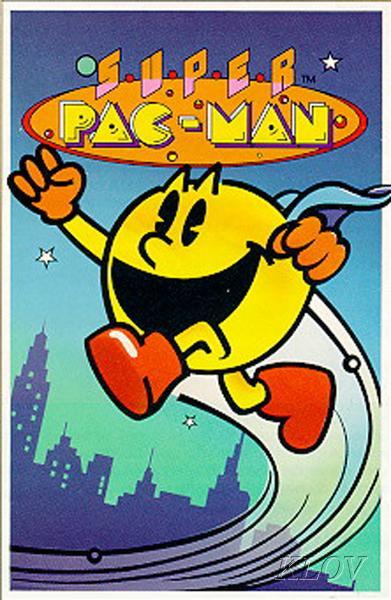
Super Pac-Man came out 33 years ago, the second sequel to Pac-Man.  Quoting wikipedia, the link may be deeper than simply nomenclature:

[Super Pac-Man’s] new gameplay mechanics were considered by many to be confusing, and too much of a change from the original two games. In particular, when Pac-Man transforms into Super Pac-Man, he was thought by some to be much more difficult to control.

Life imitates art, perhaps.  With that, I leave you with this.

[1] In addition, Perry’s campaign clearly isn’t going to be credited with any bump in the poll numbers, because it’s broke.  That raises other moral hazard problems (super PAC for candidate X might want to starve candidate X’s campaign) that are interesting, but I’ll leave them to the side for now.

On The Possibility of An Ethical Election Experiment

The recent events in Montana have sparked a broad debate about the ethics of field experiments (I’ve written once and twice about it, and other recent posts include this letter from Dan Carpenter, this Upshot post by Derek Willis, and this Monkey Cage post by Dan Drezner).  I wanted to continue a point that I hinted at in my first post:

[T]he irony is that this experiment is susceptible to second-guessing precisely because it was carried out by academics working under the auspices of research universities.  The brouhaha over this experiment has the potential to lead to the next study of this form—and more will happen—being carried out outside of such institutional channels.  While one might not like this kind of research being conducted, it is ridiculous to claim that is better that it be performed outside of the academy by individuals and organizations cloaked in even more obscurity.  Indeed, such organizations are already doing it, at least this kind of academic research can provide us with some guess about what those other organizations are finding.

Personal communications with colleagues and readers indicated that Paul Gronke was not alone in interpreting my message in that passage as something like “well, others intervene in elections in unethical ways, so scholars don’t need to worry about ethics.”  That was not my intent.  Rather, I was trying to make the point that interventions by academic researchers are more likely to be transparent and, accordingly, capable of being judged on ethical grounds, than interventions by others.  Of course, that is a contention with which one might disagree, but I’ll take it as plausible for the purposes of the rest of this post.[1]

Reflecting further on the ethics of field experiments led me to a classical social choice result known as the liberal paradox, first described by Amartya Sen.  The paradox is that respecting individual rights can lead to socially inferior outcomes.  The secret of the paradox is that sometimes our preferences over our actions depend on what others’ do (also known as “nosy preferences”).

The link between the paradox and the ethics of experimenting on elections in the following simple way.  Let’s choose between four possible worlds, depending on whether scholars and/or political parties do field experiments on elections, and let’s take my assertion about the value of open academic research as given, so that “society’s preference” is as follows:[2]

  1. Nobody does any field experiments on elections, (the “best” option)
  2. Scholars do field experiments on elections, political parties do not,
  3. Both scholars and political parties do field experiments on election, and
  4. Partisan researchers do field experiments on elections, scholars do not (the “worst” option).

Then, let’s suppose that we have two principles we’d like to respect:

  • Noninterference in Elections: Field Experiments on Elections are Unethical if They Might Affect the Election Outcome.
  • Free Speech: Political Parties Are Allowed to Do Experiments If They Choose to.

It is impossible to respect these (reasonable) principles and maximize social welfare.  Here’s the logic:

  1. If a field experiment might affect an election, then some political party will want to do it, but the experiment would be considered unethical.
  2. Thus, if a field experiment is unethical and we respect Free Speech, then some political party will do the field experiment.
  3. But if scholars behave in accordance with Noninterference, then they will not perform a field experiment that might affect the election outcome.
  4. This leads to the outcome “Partisan researchers do field experiments on elections, scholars do not,” which is clearly inefficient.  Indeed, it is the worst possible outcome from society’s standpoint.

It is not my intent to judge the ethics of any particular field experiment study here, and I do believe that there are plenty of unethical designs for field experiments.  However, I am rejecting the notion that a field experiment on an election is ethical only if it does not affect the outcome of the election.  This is because it is precisely in these cases that others will do these experiments in non-transparent ways.  This is not the same as saying “other groups do unethical things, so scholars should too.”  Rather, this is saying “groups are intervening in elections in both ethical and unethical ways, so it is important for scholars to transparently learn from and about election interventions in ethical ways.”  To say that potentially affecting an election outcome is presumptively unethical implies that a scholar who values ethical behavior will never learn about how election interventions that are occurring work, what effects they might be having on us individually and collectively, and how society might better leverage the interventions’ desirable effects and mitigate their undesirable effects.

____________

[1] Relatedly and more generally, my post has (perhaps understandably) been read as defending all field experiments on elections.  My intent, however, was two-fold: (1) guaranteeing that a field experiment will have no effect on the outcome requires the experiment to be useless and thus is too strong a requirement for a reasonable notion of ethicality and (2) coming up with a reasonable notion of ethicality requires taking (social choice) theory seriously, during the design of the field experiment.

[2] One can substitute any private corporation/interest/government agency/conspiracy one wants for “political parties.”

Ethics, Experiments, and Election Administration

Nothing gets political scientists as excited as elections.  In this previous post, I discussed the Montana field experiment controversy. In that post, I pointed out that the ethics of field experiments in elections—e.g., in which some people are given additional information and others are not—are complicated.  In the majority of the post, I was attempting to respond to claims by some that ethical field experiments must have no effect on the “outcome.”[1]

Moving back from us egg-heads and our science, it dawned on me that the notion of an intervention (or treatment) is quite broad.  In particular, any change in electoral institutions—such as early voting, voter ID requirements, or partisan/non-partisan elections, to name a few—is, setting intentions aside, equivalent to a field experiment.[2]  By considering this analogy in just a bit more detail, I hope to make clear the point of my original post, which was that

In the end, the ethical design of field experiments requires making trade-offs between at least two desiderata:

1. The value of the information to be learned and
2. The invasiveness of the intervention.

Whenever one makes trade-offs, one is engaging in the aggregation of two or more goals or criteria […] and thus requires thinking in theoretical terms before running the experiment.  One should have taken the time to think about both the likely immediate effects of the experiment and also what will be affected by the information that is learned from the results.

Along these lines, consider the question of whether one should institute early voting.  There are two trade-offs to consider.  On the “pro” side, early voting can enhance/broaden participation.  On the “con” side, early voting can allow people to cast less-than-perfectly informed votes, because they vote before the election campaign is over.[3]

So, is early voting ethical?  Well, the (strong and/or “straw man-ized”) arguments about the ethics of field experiments would imply that this experiment/intervention is ethical only if it doesn’t affect the outcome of the election.   It is nonsense to claim that we are collectively certain that early voting has no effect on election outcomes.[4]

So, then, the question would be whether the good (increased participation) “outweighs” the bad (uninformed voting).  If there are any voters who would have voted on election day, but vote early and then regret that they can’t vote on election day, this trade-off is contestable—it depends on (1) how important participation is to you and (2) how costly mistaken/uninformed voting is to youI’ll submit that these two weights are not universally shared. 

To be clear, I favor early voting.  But that’s because I think participation is per se valuable, and most individuals’ votes are not pivotal in most elections.  That is, I think that the second dimension—uninformed voting—doesn’t affect election outcomes very often and making participation less costly is a good thing for more general social outcomes beyond elections.

But you see, that evaluation—the conclusion that early voting is ethical—is based not only on my own values, but also on an explicit, non-trivial calculation.  In thinking about the Montana experiment and similar field experiments, my point is this: if you want to be ethical, you need to do some theorizing when designing your experiment. Because an experimental manipulation of an election is—in practice—equivalent to a “reform” of election administration.[5]

With that, I leave you with this.

_____

[1] The notion of what exactly is an outcome is unclear, but it is okay for this post to just consider the question of “who won the election?”

[2] I say set intentions aside, because critics of my position (see Paul Gronke’s post, for example, which quotes a casual (and accurate) footnote from my previous post.)

[3] I am not an expert in all forms of early voting.  However, it is the case that in some states at least (Texas, for example), once you’ve voted early, you can’t cancel the vote.

[4] See, I didn’t even get into the mess that follows when one tries to figure out what an ethical democratic/collective norm would be, which this necessarily must be, since it is concerning collective outcomes.  Strong non-interference arguments in this context would nearly immediately imply that we should all follow Rousseau’s suggestion and each go figure out the common will on our own.

[5] You can easily port this argument over to the arguments about voter ID laws, where the trade-offs are between participation and voter fraud.

Well, In a Worst Case Scenario, Your Treatment Works…

Three political scientists have recently attracted a great deal of attention because they sent mailers to 100,000 Montana voters.  The basics of the story are available elsewhere (see the link above), so I’ll move along to my points.  The researchers’ study is being criticized on at least three grounds, and I’ll respond to two of these, setting the third to the side because it isn’t that interesting.[1]

The two criticisms of the study I’ll discuss here share a common core, as each centers on whether it is okay to intervene in elections.  They are distinguished by specificity—whether it was okay to intervene in these elections vs. whether it is okay to intervene in any election.  My initial point deals with these elections, which aren’t as “pure” as one might infer from some of the narrative out there, and my second, more general point is that you can’t make an omelet without breaking some eggs.  Or, put another way, you usually can’t take measurements of an object without affecting the object itself.

400px-Montana-StateSeal.svg


“Non-Partisan” Doesn’t Mean What You Think It Means.  The Montana elections in question are nonpartisan judicial elections.  The mailers “placed” candidates on an ideological scale that was anchored by President Obama and Mitt Romney.  So, perhaps the mailers affected the electoral process by making it “partisan.”  I think this criticism is pretty shaky.  Non-partisan doesn’t mean non-ideological.  Rather, it means that parties play no official role in placing candidates on the ballot.  A principal argument for such elections is a “Progressive” concern with partisan “control” of the office in question.  I’ll note that Obama and Romney are partisans, of course, but candidates for non-partisan races can be partisans, too.  Indeed, candidates in non-partisan races can, and do, address issues that are clearly associated with partisan alignment (death penalty, abortion, drug policy, etc.)  In fact, prior to this, one of the races addressed in the mailers was already attracting attention for its “partisan tone.” So, while non-partisan politics might sound dreamy, expecting real electoral politics to play in concert with such a goal is indeed only that: a dream.

Intervention Is Necessary For Learning & Our Job Is To Learn. The most interesting criticism of the study rests on concerns that the study itself might have affected the election outcome.  The presumption in this criticism is that affecting the election outcome is bad.  I don’t accept that premise, but I don’t reject it either.  A key question in my mind is whether the intent of the research was to influence the election outcome and, if so, to what end.  I think it is fair to assume that the researchers didn’t have some ulterior motive in this case.  Period.

That said, along these lines, Chris Blattman makes a related point about whether it is permissible to want to affect the election outcome. I’ll take the argument a step farther and say that the field is supposed to generate work that might guide the choice of public policies, the design of institutions, and ultimately individual behavior itself.  Otherwise, why the heck are we in this business?

Even setting that aside, those who argue that this type of research (known as “field experiments”) should have no impact on real-world outcomes (e.g., see this excellent post by Melissa Michelson) kind of miss the point of doing the study at all.  This is because the point of the experiment is to identify the impact of some treatment/intervention on individual behavior.  There are three related points hidden in here.  First, the idea of a well-designed study is to measure an effect that we don’t already have precise knowledge of.[2]  So, one can never be certain that an experiment will have no effect: should ethics be judged ex ante or ex post?  (I have already implied that I think ex ante is the proper standpoint.)

Second, it is arguably impossible to obtain the desired measurement without affecting the outcomes, particularly if one views the outcome as being more than simply “who won the election?”    To guarantee that the outcome is not affected implies that one has to design the experiment to fail in a measurement sense.

Third, the question of whether the treatment had an effect can be gauged only imprecisely (e.g., by comparing treated individuals with untreated ones).  Knowing whether one had an effect requires measuring/estimating the counterfactual of what would have happened in the absence of the experiment.  I’ll set this aside, but note that there’s an even deeper question in where if one wanted to think about how one would fairly or democratically design an experiment on collective choice/action situations.

So, while protecting the democratic process is obviously of near-paramount importance, if you want to have gold standard quality information about how elections actually work—if you want to know things like

  1. whether non-partisan elections are better than partisan elections,
  2. what information voters pay attention to and what information they don’t, or
  3. what kind of information promotes responsiveness by incumbents,

then one needs to potentially affect election outcomes.  The analogy with drug trials is spot-on.  On the one hand, a drug trial should be designed to give as much quality of life to as many patients as possible.  But the question is, relative to what baseline?  A naive approach would be to say “well, minimize the number of people who are made worse off by having been in the drug trial.”  That’s easy: cancel the trial. But of course that comes with a cost—maybe the drug is helpful.  Similarly, one can’t just shuffle the problem aside by arguing for the “least invasive” treatment, because the logic unravels again to imply that the drug trial should be scrapped.

Experimental Design is an Aggregation Problem. In the end, the ethical design of field experiments requires making trade-offs between at least two desiderata:

  1. The value of the information to be learned and
  2. The invasiveness of the intervention.

Whenever one makes trade-offs, one is engaging in the aggregation of two or more goals or criteria.  Accordingly, evaluating the ethics of experimental design falls in the realm of social choice theory (see my new forthcoming paper with Maggie Penn, as well as our book, for more on these types of questions) and thus requires thinking in theoretical terms before running the experiment.  One should have taken the time to think about both the likely immediate effects of the experiment and also what will be affected by the information that is learned from the results.

This Ain’t That Different From What Many Others Do All The Time. My final point dovetails with Blattman’s argument in some ways.  Note that, aside from the matter of the Great Seal of the State of Montana, nothing that the researchers did would be inadmissible if they had just done it on their own as citizens.  Many groups do exactly this kind of thing, including non-partisan ones such as the League of Women Voters, ideological groups such as Americans for Democratic Action (ADA) and the American Conservative Union (ACU), and issue groups such as the National Rifle Association (NRA) and the Sierra Club.

Thus, the irony is that this experiment is susceptible to second-guessing precisely because it was carried out by academics working under the auspices of research universities.  The brouhaha over this experiment has the potential to lead to the next study of this form—and more will happen—being carried out outside of such institutional channels.  While one might not like this kind of research being conducted, it is ridiculous to claim that is better that it be performed outside of the academy by individuals and organizations cloaked in even more obscurity.  Indeed, such organizations are already doing it, at least this kind of academic research can provide us with some guess about what those other organizations are finding.[3][4]

With that, I leave you with this.

_____________

[1]One line of criticism centers on whether the mailer was deceptive, because it bore the official seal of the State of Montana. This was probably against the law. (There are apparently several other laws that the study might have violated as well, but this point travels to those as well.) While intriguing because we so rarely get to discuss the power of seals these days, this is a relatively simple matter: if it’s against the law to do it, then the researchers should not have done so.  Even if it is not against the law, I’d agree that it is deceptive.  Whether deception is a problem in social science experiments is itself somewhat controversial, but I’ll set that to the side.

[2] For example, while the reason we went to the moon was partly about “because it’s there,” aka the George Mallory theory of policymaking, it was also arguably about settling the “is it made of green cheese?” debate.  It turns out, no. 🙁

[3] I will point out quickly that this type of experimental work is done all the time by corporations.  This is often called “market research” or “market testing.”  People don’t like to think they are being treated like guinea pigs, but trust me…you are.  And you always will be.

[4] This excellent post by Thomas Leeper beat me to the irony of people getting upset at the policy relevance of political science research.

If Keyser Söze Ruled America, Would We Know?

In this post on Mischiefs of Faction, Seth Masket discusses the recent debate about whether (super-)rich are overly influential in American politics.  I’ve already said a bit about the recent Gilens and Page piece that provides evidence that rich interests might have more pull than those of the average American.  In a nutshell, I don’t believe that the (nonetheless impressive) evidence presented by Gilens and Page demonstrates that the rich are actually driving, as opposed to responding to, politics.[1]

Seth’s post echoes my skepticism in some respects.  First, the rich and “super rich” donors are less polarized than are “small” donors.  Second, and perhaps even more importantly, admittedly casual inspection of REALLY large donors suggests that they are backing losing causes.  As Seth writes,

…the very wealthy aren’t necessarily getting what they’re paying for. Note that Sheldon Adelson appears in the above graph. He’s pretty conservative, according to these figures, and he memorably spent about $20 million in 2012 to buy Newt Gingrich the Republican presidential nomination, which kind of didn’t happen […] he definitely didn’t get what he paid for. (Okay, yeah, he sent a signal that he’s a rich guy who will spend money on politics, but people knew that already.)

While most donations aren’t quite at this level, they nonetheless follow a similar path, with a lot of them not really buying anything at all. To some extent, the money gives them access to politicians, which isn’t nothing.“[2]

The Adelson point raises another problem we need to confront when looking for the influence of money in American politics.  Since the 1970s, most federal campaign contribution data has been public.  Furthermore, even the ways in which one can spend money that are less transparent (e.g., independent expenditures) can be credibly revealed to the public if the donor(s) want to do so.

Thus, a rich donor with strong, public opinions could achieve influence on candidates—even or especially those he or she does not contribute to—by donating a bunch of money to long-shot, extreme/fringe candidates.  This is a costly signal of how much the donor cares about the issue(s) he or she is raising, and might lead to other candidates “etch-a-sketching” their positions closer to the goals of the donor.  Indeed, these candidates need not expect to ever receive a dime from the donor in question: they might just want to “turn off the spigot” and move on with the other dimensions of the campaign.

Furthermore, such candidates might actually prefer to not receive donations/explicit support from these donors.  After all, a candidate might not want to be either associated with the donor from a personal or policy stance (do you think anyone is courting Donald Sterling for endorsements right now?) or, even more ironically, the candidate might worry about being seen as “in the donor’s pocket.” Finally, there are a lot of rich donors, and they don’t espouse identical views on every topic.  As Seth notes,

“politicians are wary of boldly adopting a wealthy donor’s views, and … they hear from a lot of wealthy donors across the political spectrum, who probably have conflicting ideas”

Overall, tracing political influence through known-to-be-observable actions such as donations, press releases, and endorsements is perilous.  A truly influential individual sometimes wants to minimize the public’s awareness of his or her influence, particularly when that influence is being exercised through others.  It is useful to always remember Kevin Spacey’s line from The Usual Suspects:

The greatest trick the Devil ever pulled was convincing the world he didn’t exist.”[3][4]

From an empirical standpoint, I think the current debate about influence in American politics is interesting: for example, it is motivating people to think about both what data can be collected and innovative ways to manipulate and visualize it.  But I caution against the temptation to jump from it to wholesale normative judgments about the state of American politics.  Specifically, there’s another Kevin Spacey line in The Usual Suspects that is useful to remember as politicos and pundits debate who truly “controls” American politics:

To a cop, the explanation is never that complicated. It’s always simple. There’s no mystery to the street, no arch criminal behind it all. If you got a dead body and you think his brother did it, you’re gonna find out you’re right.


_____________

[1] This is what is known as an “endogeneity problem.”  While some people roll their eyes at such claims, I provided a theory (and could provide more than couple of additional ones) that support the claim that such a problem might exist.  Hence, I humbly assert that the burden of proving that this is not a problem rests on those who claim that the evidence is indeed “causal” in nature.

[2] As a side note, I’ve also argued that donors should be expected to have more access to politicians than non-donors, and that this need not represent a failing of our (or any) democratic system.

[3] Verifying my memory of this quote, I found out that it is a restatement of a line by Baudelaire: “La plus belle des ruses du diable est de vous persuader qu’il n’existe pas.I have no idea what this has to do with anything, but I feel marginally more erudite after copy-and-pasting French into my post.

[4] I will simply note in passing the link between this and the entirety of the first two seasons of the US version of House of Cards.


Shining A Little More Light On Transparency

Thinking more about transparency (which I just wrote about), it occurred to me that I neglected two pieces (of many) that are relevant for the point about transparency of decision-making in bodies like the Federal Open Market Committee (FOMC) in which expertise plays an important role in justifying the body’s authority.

David Stasavage and Ellen Meade made use of a great (and entirely on point) data set in their analysis of the effect of transparency on FOMC decision-making in their Economic Journal article, “Publicity of Debate and the Incentive to Dissent: Evidence from the US Federal Reserve.” They find strong evidence that, once members knew their statements were being recorded, both the content of their opinions and their individual votes on monetary decisions changed.  

The general implications of this point from a theoretical perspective are nicely laid out in Stasavage’s Journal of Politics article, “Polarization and Publicity: Rethinking the Benefits of Deliberative Democracy.” Transparency can affect individual incentives, particularly among career-motivated decision-makers.  If one presumes that the decision-makers in a deliberative are motivated to “look good” by making good decisions, and one is mostly or wholly concerned with the quality of their performance then, in a specific sense, transparency of individual decision-makers’ opinions and votes can “only hurt” actual performance, because the decision-makers are not worried not only about the performance of their collective decisions (e.g., the actual inflation rate), but also by how their individual opinions/inputs are viewed.

Why Have Transparency At All, Then?

There are two broad categories of theoretical arguments in favor of transparency.  The first of these is screening and the second is record-keeping.

Screening. Recall that the problems with transparency sketched out above and in my previous post follow from the presumption that some or all of the decision-makers are interested in being rewarded and/or retained by voters/Congress/the president or whomever else might employ them in the future.  This “career-concerns model” of course implies that somebody else is going to be considering whether to retain, hire, or promote these decision-makers again in the future.  I’ll leave the details to the side for now and simply note that, if the “next job” for which they will be considered is sufficiently important relative to the current job, the ability to possibly infer something about the relative expertise or abilities of the decision-makers might be sufficiently valuable to warrant introducing some “noise” into the current decision-making.[1]

Record-Keeping. Nobody lives forever.  Many decision-making bodies that have authority because it is believed that expert decision-making can and should be used to set policy exist for many years, with decision-makers rotating in and out.  In such situations, because one is leveraging expertise as a justification, one might think that past experience can inform future decisions.  Steve Callander has recently published several excellent articles (here, here, and here) that offer a good starting point (unexplored as far as I know) for us to consider the types situations in which transparency can be helpful by allowing future decision-makers to not only observe past performance, but also learn how policy decisions actually affect outcomes by observing the details of the decisions that produced those outcomes.

Note that this argument, as opposed to the screening argument above, leaves room for one to think meaningfully about the proper “lag” or delay of transparency.  As the evolution of FOMC policy illustrates, many transparency policies involve a delay between decision and publication.[2] Interesting aspects of the policy process, such as how much information is conveyed by more recent versus older decisions, would presumably play a role in the final derivation of how much transparency is optimal.

Conclusions. If there’s any grand conclusion from this post, it’s that I think there’s a lot of important topics left in the study of transparency, and as social science theorists we should start thinking about getting closer to the “policy technology side” of the decision(s) being made.  Abstract static models provide a lot of very key and portable insights.  But they can take us only so far.

_________

[1] Of course, if transparency in the current decision process leads every decision-maker to “pool” and do the same thing, regardless of their type, then one can’t infer anything about the decision-makers from their decision, thereby obviating this argument for transparency.  This will be the case when the decision-makers are sufficiently motivated to “get hired in the next job” relative to their innate preference to “make the right decision” in the current matter at hand.  In the FOMC, this would be an FOMC member who cares a lot more about becoming (say) Fed Chairman someday than he or she does about getting monetary policy “right” today.

[2] This type of argument, combined with career concerns, would also allow us to think in more detail about to whom the decisions ought to be made transparent and from whom this information should be withheld.


Why Separate When You Can…Lustrate!?!

Today’s post by Maria Popova and Vincent Post, “What is lustration and is it a good idea for Ukraine to adopt it?” made me think about the difference between what I will call policy and discretionary purges.

It is not easy for a nation to fix itself after a period of authoritarian rule.  There are many individuals who actually compose the government, and it is not clear that they share the ideals of the new government and, even if they do, the worries about career concerns and adverse selection that I raised a few minutes ago here suggest that changing behaviors might be hard even if the vast majority of bureaucrats/judges/legislators agree with democratic norms, the rule of law, the relative inelegance of bashing your opponents’ heads in, etc.

So, one practical approach to fixing an institution in the sense of massively and quickly redirecting its aggregate behavior (as produced by the panoply of individual decision-makers’ choices) is what we might call wiping the slate clean.  Clear the decks, Ctrl-Alt-Delete the whole shebang.

Another way is to find the people who are the problem(s) and eliminate them.  The prospect of removal might, in equilibrium, convert some who were previously scofflaws into temperate and sage clerks, after all.

I want to make a quick point.  Removal of officials is practically hard (because those who fear removal will hide evidence and otherwise obstruct the Remover’s attempts to ferret them out).  But, more intriguingly, removal of officials is politically hard…for the Remover. In cases like the Ukraine, this isn’t because removal of any official is likely to be unpopular (it’s probably the reverse…just ask Vergniaud). Rather, the problem is one of adverse selection in terms of those who are judging the motivations and trying to predict the future actions of the Remover.[1]

To think about this clearly and quickly, consider the baseline case where the Remover “cleans house,” removing everyone, and then consider the deviation from this in which the Remover “forgives” one official, who I will call “Official X.”[2]

What should we infer?  Does the Remover really have information that exculpates Official X?  Or perhaps Official X paid a bribe?  Or perhaps Official X is blackmailing the Remover? Or perhaps…       You can see where this is going.  The Remover is at risk of being suspected of being or doing something untoward if he or she has and uses any discretion.  Accordingly, the Remover would prefer to not have discretion.

The same logic applies, obviously, to a plan of “well, let the Remover prosecute those who `should’ be removed.”  Unless the Remover’s hands are tied with respect to whom to prosecute, people will always have reason to wonder “well, Official Y got prosecuted….but not Official X….”

Is Lustration a good idea?  I don’t know.  And I will mention that Popova and Post are making a different point, which is really about the extent and severity of lustration.  My point here is just that “statutory/mandated purges” are very different from “executive/discretionary purges” and, somewhat counterintuitively, it may very well be in the interests of “the Remover” to have his or her discretion taken away.[3]

__________

[1] Note that, as always, this is equivalent to a problem of credible commitment on the part of the Remover to “not use his/her biases” when deciding whom to remove.

[2] The logic holds generally (i.e., when the Remover forgives/pardons more than one official), but this focuses our attention in a nice way.

[3] I’m trying to keep these short, but I’ll note that this incentive is stronger for a Remover who believes that the external audiences who are trying to judge the Remover’s information/character/etc. are really uncertain about the Remover’s information/character/etc.  This is because high levels of initial uncertainty imply that the discretionary actions of the Remover will have a larger impact on the beliefs held by the members of the audience, and the adverse implications of discretion on these beliefs is the justification for the Remover wanting to limit his or her own discretion.

How Transparency Could Harm You, Me, and the FOMC

Sarah Binder, as usual, provides excellent insights into a difficult political problem in this post discussing the potential political and economic pitfalls of imposing greater transparency on the Federal Open Market Committee (FOMC), which essentially directs the Federal Reserve’s active participation in the economy, thereby having the most direct control over short-term interest rates and, accordingly, day-to-day “monetary policy” in the United States.

The FOMC is a really big deal.  As Binder notes, the importance of the committee accordingly makes both economic and political observers keen to understand and forecast what it will do in the future.  By deciding over the past decade or so to publish more and more detailed data about the views of the FOMC members,[1] the Fed has increased the transparency of the information it receives.

This seems like a good idea, right?

Well, social science theories in both economics and political science acknowledge the importance of whether the FOMC’s behavior is predictable or not.  On the economics side, predictability of monetary policy (at least in terms of its outputs such inflation) is generally perceived to be a good thing, because it allows investors to focus more attention on the “fundamentals” of an asset’s value, as opposed to paying a lot of attention to purely nominal phenomena and/or inefficiently delaying/accelerating investment and consumption decisions.  In other words, while a low, fixed inflation rate is good, variation in the inflation rate is inevitable, and if this variation can be reasonably accurately forecast, this is a “second-best” outcome.

On the political science side of things, a traditional argument for transparency (in addition to the one above) is that it fosters legitimacy and/or public confidence in the Fed, and thereby makes the Fed a more credible “political actor.”  A more technical description of this is that transparency alleviates an adverse selection problem between the Fed and the public.  The Fed knows something that the public/Congress/Presidents want to know, and—in some situations—everyone would be better off if the Fed could somehow just reveal this information to the public/Congress/Presidents.

Solving this kind of problem is very tricky in practice, because a real solution requires that the Fed not be responsible for releasing the information.  And there’s some interesting things in the FOMC structure (it’s composed of multiple, and members with various overlapping terms) and the evolution of the transparency.

Being the contrarian that I am, I wanted to note two arguments against too much transparency.  I don’t think these are strong enough to justify total opacity, of course, but I do believe they’re strong enough to serve as cautionary tales regarding total transparency.

Each of these arguments revolves around an additional potential instantiation of adverse selection.  The first regards the motives of the individual members of the FOMC.  When decision-makers are career-oriented (they want to be reappointed/promoted/rewarded for their ability/performance, etc.), too much transparency about the decision-maker’s actual decision (i.e., votes and personal positions on monetary policy in the FOMC meetings) can induce conformism (or “pooling”) by the agents such that their policy decisions become suboptimally unresponsive.  For example, everybody might start acting as an inflation hawk would so as to increase the perception of their hawkishness (a worry indirectly indicated in Yellen’s comments as discussed by Binder).[2]

The second argument involves the incentives of those that make individual decisions that the Fed observes.  In particular, the Fed (and every regulatory agency) collects lots of data about the behaviors of firms and individuals.  In some cases, if (say) major firms (as the Fed is responsible for regulating) have access to the information that the Fed will ultimately use to make policy, the incentives of these firms to make decisions that are individually suboptimal in order to try and manipulate the Fed’s subsequent decision-making will be exacerbated.  That is, transparency of the Fed’s information can increase the incentives of major banks (and, arguably, even other regulators) to choose their own actions in ways that try to obscure their own private information.  When this happens, you have a double-whammy: (1) the individual firms’ decisions are not optimal and (2) the Fed does not glean as much information about the real state of the economy from the decisions of these firms.

Sean Gailmard and I make this point (coincidentally with an empirical application to Financial Industry Regulatory Authority (FINRA)) in our recent working paper, “Giving Advice vs. Making Decisions: Transparency, Information, and Delegation.”

Conclusion. I definitely don’t know what the “right” policy for the Fed is without further thought.  But the supposition that “increased transparency is unambiguously good” is at odds with at least two theoretical arguments. Accordingly, it might not be nefarious motives that lead policymakers to call for discussion of “how much transparency is too much?”

____________________

[1] See this description of the recent evolution of Fed transparency and, for a little historical context, see this report describing the 2007 change.

[2] Note that this argument implies that observing the actions of the decision-maker(s) can be bad, but it does not necessarily imply that observing what happens from those decisions (e.g., the actual inflation rate) can be bad. (Good citations on this point are Prat (2005) (ungated working paper here) and Levy (2007) (ungated working paper here), and my colleague Justin Fox has produced multiple excellent theoretical studies centering on this question (here, here (with Ken Shotts), and here (with Richard Van Weelden)).

It’s Better To Fight When You Can Win, Or At Least Look Like You Did

In this post, Larry Bartels provocatively claims that Rich People Rule! In a nutshell, Bartels argues (correctly) that more and more political scientists are producing multiple and smart independent analyses of the determinants of public policy, one of which, by Kalla and Broockman, I have already opined on (“Donation Discrimination Denotes Deliverance of Democracy“).

Bartel’s motivation for bringing this up is essentially this quote from this forthcoming article by Martin Gilens & Benjamin Page:

economic elites and organized groups representing business interests have substantial independent impacts on U.S. government policy, while mass-based interest groups and average citizens have little or no independent influence.

The Gilens and Page is an interesting read, if only because the data on which it is based is very impressive.

Unfortunately, the theory behind the work is not nearly as strong.  In particular, the study is based on comparing observed position-taking by interest groups with (solicited) individual feedback on various surveys.[1]  So what?  Well, there is at least one potential problem, containing two sub-points, the combination of which I’ll call the Pick Your Battles Hypothesis.

Pick your battles.  Interest groups do not randomly announce positions on public issues.  Rather, any interest group of political interest presumably attempts to influence public policy through strategic choices of not only what to say, but when to bother saying anything at all.  While the mass public opinion data was presumably gathered by pollsters in ways to at least somewhat minimize individuals’ costs of providing their opinions, the interest groups had to pay the direct and indirect costs of getting their message(s) out. There’s two sub-points here, one more theoretical interesting than the other and the other presumably more empirically relevant.

Sub-point 1: Pick a winner. The theoretically interesting sub-point is that an organized “interest group” is/are the agents of donors and supporters.  To the degree that donations and support are conditioned on the perceived effectiveness of the interest group, (the leaders/decision-makers of) an interest group will—ala standard principal-agent theory—have a greater incentive to pay the costs of taking a public position when they perceive that they are likely to “win.”  If there is such a selection effect at work, then the measured correlation between policy and interest groups’ positions will be overestimated.

Sub-point 2: Only Fight The Fights That Can Be Won. The more empirically relevant sub-point is that, even if one thinks that interest groups don’t fear being on the losing side of a public debate, the simple and cold reality of instrumental rationality is that, if making an announcement is costly, any interest group should make an announcement only when the announcement can actually affect something.  Moving quickly here, this suggests that interest groups should be taking positions when they believe decision-makers might be persuaded.  To the degree that these decision-makers are presumably at least somewhat responsive to public opinion (however measured), instrumentally rational (and probably asymmetrically informed) interest groups will be more likely to make announcements that run against relative strong public opinion than to join the chorus.[2]  If this is happening, the question of whether interest groups have too much influence depends on whether you think they have better or worse information and on the types of policies that their views are influential on.

Conclusion. As political scientists know, observational data is tricky.  This is particularly true when it is the result of costly individual effort in pursuit of policy (and other) goals.  I really like Gilens and Page’s paper—the realistic point of scholarly inquiry is not to be right, it’s to get ever closer to being right, and this is even more true with directly policy-relevant work.  I just think that great data should be combined with at least a modicum of (micro-founded, individualistic) theoretical argument.  Without that, we might think umbrellas cause rain, hiring a lawyer causes you to go to jail, or chemotherapy causes death from cancer.  In other words, the analyst has simultaneously more data and less information than those he or she studies.

_______________

[1] Gilens and Page also compare responsiveness to mass opinions of economic elites (i.e., those in the 90th percentile in income) versus those of the median earner.  While I have some issues with this comparison (for example, I imagine getting a representative sample of the 90th income percentile is a bit different than getting one of the median income earner and, as Gilens and Page acknowledge, the information held by and incentives of the rich are plausibly very different from those of median earners), I will focus on the interest group component of the analysis in this post.

[2]  That this is not just hypothetical crazy talk is indicated by the relatively strong negative correlation (-.10***) between the positions of business interest groups and the average citizen’s preferences.